
Revised Draft
Activism at U.N.E.: Sage Advice from the University’s Head Access Services Librarian
“Reflect on your practice. But then you need to test it in the world; you’ve got to be with people.” – Marianne Kaba
By Colette Murphy
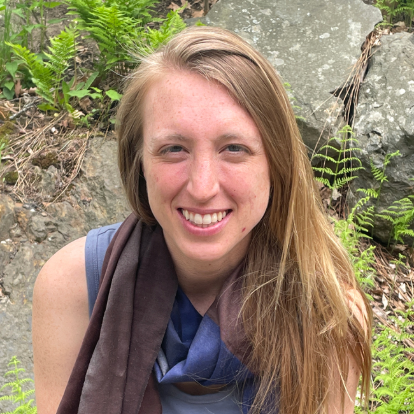
Everyone who meets Anton Lund takes a liking to them.
“I started volunteering with Domestic Violence work when I was in undergrad at the women’s resource center in Boulder.” They said. They’re smiling as they always do and always will. It’s a huge part of them- anyone who pictures Anton in their mind can say with confidence that they’re smiling.
Anton Lund works as the head access services librarian at the University of New England’s Ketchum Library where students and faculty busy themselves with academics and hurried talk in brief passings to lunch or class. Anton is neat and bright-eyed with a background in English studies, women and gender studies, and LGBTQ+ studies from the University of Colorado, Boulder.
“Whenever I find myself on campus, when I step outside, I feel like I’m about ready to take a hike every time! I show up to my work much differently when I go outside. Always have someone who can pull you outside.” Says Anton. They embody the brisk energy of an autumn hike- green eyes and long, auburn brushed hair.
They always have a cup of homebrewed Kombucha with them, and in classic Anton-fashion, they pause to take a couple of steady sips. “Right now, I work at SIGNAL as a ‘verifier,’ meaning if I.C.E. is reported in a local neighborhood, I text folks who are local so that they know I.C.E. is out and about.”
“I took that experience into Portland where I signed up for a domestic violence hotline for seven years off and on,” Anton is soft spoken and caring with an earthy air that is only extended by a kind presence and willingness to help and cater to everyone’s needs. “Engaging in that volunteer work meant that I was more equipped to show up for situations with a flexible and person-centered lens.” They’re always ready to express why one should care about the world in all its intricacies within different communities. They’ve gained a level of experience in interacting with people who are different from them. They say how doing such outreach has become their baseline area of comfort; that it lets their work within activism become easier to manage and in doing so has deepened their curiosity about other communities.
Anton not only teaches but encourages community work amongst the library staff. “They’re always buzzing with ways to express activism in the everyday.” Says Cathleen Miller, U.N.E.’s Ketchum Library’s Education and Outreach Archivist. “Whether I’m working with professors or in the archives, Anton is always there and always curious- and I believe that’s important.” Cathleen says.
Anton has worked at public libraries in the past and served in a role oriented towards crisis work and referrals, but over time they ran out of room for growth, which brought them to U.N.E.’s Ketchum Library; “it’s hard to recognize when you’ve outgrown something. It’s harder to take the first step in what comes after that.” Anton says.
“I am also a part of the board of the Equality Community Center as a secretary- it’s a social-justice-oriented space. The work there rests on the shoulders of folks who had to do a lot of activism to get there, and now it holds a space to foster the activism of other groups.” They look to the flowery stained-glass window next to us in thought. “As a queer person, I’ve learned to attune to the needs of folks who are more marginalized than I am, and what it’s like for them to be in those spaces.” Says Anton.
As an undergrad, they got more invested in the needs of people in crisis- especially those who used harder I.V. drugs. Later, when they got their Master’s in Library Sciences at Simmons College, they carried that caring lens and their stories with them.
Their energy for helping people is high at all times, even now they volunteer from 10 AM to 5 PM on Wednesdays at a Grief Therapy group in Portland. “Ensuring that people have access in terms of what’s going on for them in grief means they start to feel more valued in a community setting.” Says Anton. “They suddenly have a deeper capacity for taking care of themselves and the relationships they’re making.”
Once again, they’re smiling as they sip on their Kombucha. “Each place I’ve landed within has offered me different opportunities to learn more about the needs of a community and the ways that I can bring my skillsets to support some of the gaps within them.” Most who know Anton are taken aback by the fierceness for which they care, advocate, and act on their intentions for people of all backgrounds.
Anton has a habit of awakening the curiosities in others. “To become activist is to realize you can support people in a deeper way of thinking and experiencing. It is a relationship that supports others who are doing similar work in a decentralized way.”
